 Two by Two
SEVEN DAYS RUNNING FROM PILLAR TO POST
When Car Brakes Slow Down Life ⬗ /18th August, 2026
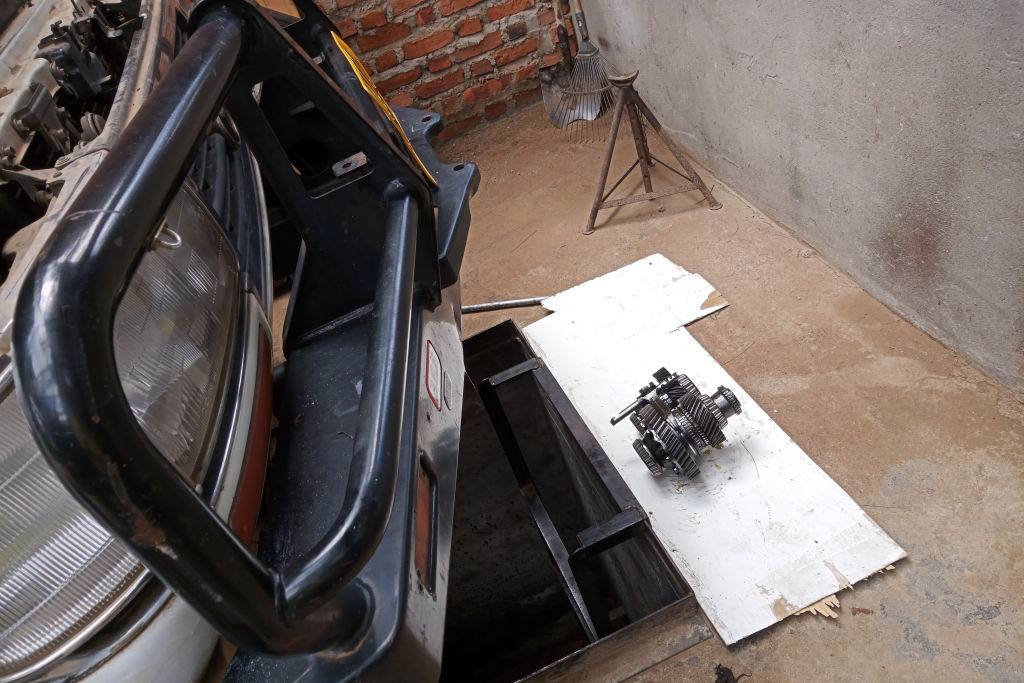
In the beginning of our term — we were still in language school in Iringa — our twenty-year-old car caused us serious trouble. We then decided to have the most urgent issues repaired and then sell it. For the moment it was in Kipapi's Garage, up on the pit. Oswardi, our fundi ya magari (car mechanic) meticulously took the engine apart.
After two days Oswardi gave me a piece of paper.
"Vitu mbalimbali. Uzinunue. — A number of things. Please go buy them."
"Ni nini? — What's this?" I asked.
He came closer.
"Ni mehn breki silinda, breki fluid na mafuta. — This is a main brake cylinder, brake fluid and grease."
he explained while tapping with his greasy finger on each item.
It dawned on me: I myself should buy the spares that he needed. Was it not his work? Oh yeah, it was. But it was my car —
and therefore my job.
"Wapi? — Where?" I asked.
"Mjini! — Downtown!" He gave me an encouraging nod and left for the garage.
"Mjini! Where else?!" I thought frustratedly and left for town.
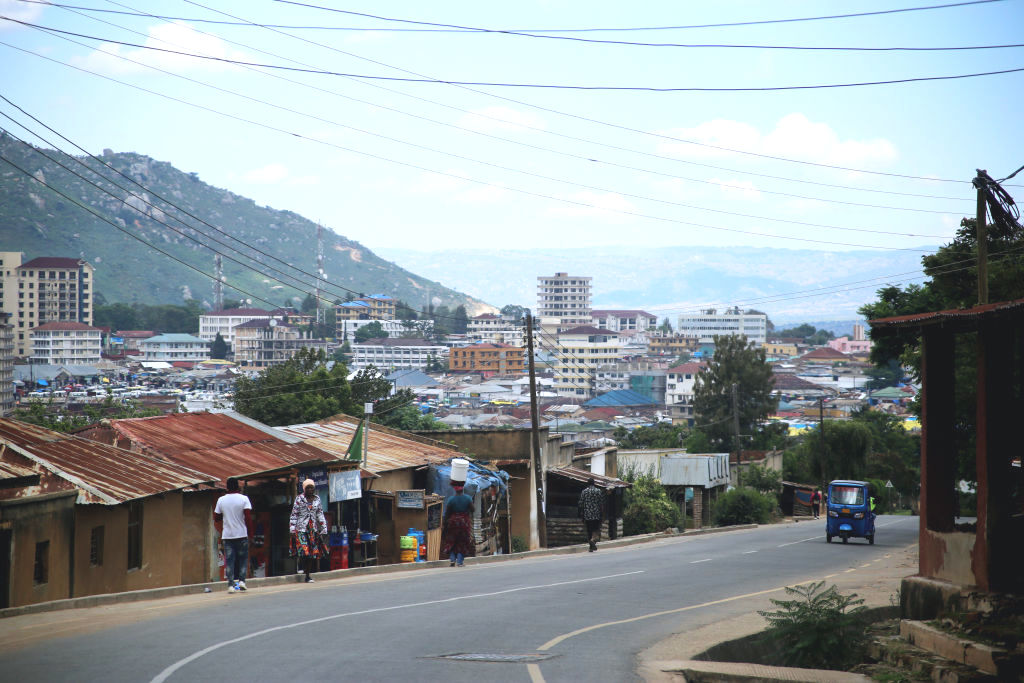
It was surprisingly easy to get the brake fluid and the grease. Finding the right brake cylinder was a challenge. Finally I found a store that seemed to have one. For 60,000 Shilling, which was around twenty Euros. Rather cheap, I thought. At home Oswardi told me it was not the right type for my car. So - going back to town again. Kipapi, the property manager — and trained car mechanic — came along this time.
It showed the store did not have what we needed and returning the part in exchange for money, it seemed, was not part of the salesman's business understanding. Kipapi, however, talked him into taking back the brake cylinder.
In our search we came to a rather large spare-part store and we spoke to the owner.
"Sorry, I do not have what you need. If you are looking for a better quality, then go for "made in Taiwan", not "made in China", which
you usually get. But it is twice as expensive. I do not have it in stock. People won't buy it because the can't afford it, you see?
They do know that "made in China" doesn't last. But what can I do? So if you go for "made in Taiwan", go to Kindola Autoparts.
It was already dark, but we drove to Kindola's. Closed. Kipapi knew his telephone number and rang him up. Half an hour later he came and
unlocked his shop. We apologized extensively for getting him out during closing hours.
"Hakuna shida — No problem." he replied, restacking the boxes in his storage in search of our "made in Taiwan" brake cylinder.
"Hamna! — I don't have!" he finally said, "Pole — sorry."
"I'm sorry, too!" I thought. I was tired and disappointed. Meanwhile I had decided to buy a genuine "made in Japan" brake cylinder at
the Toyota store. It would cost me 900,000 Shilling, about three hundred Euros, but it was lasting Toyota quality. This, in the end,
seemed to me what counted, especially as it concerns parts for safety, like a brake cylinder.
Next morning I went to the Toyota store.
"Habari? — What's new?" I greeted.
"Safi. Na wewe? — Fine. And you?"
"Bomba! — Top!" I replied. The Toyota man looked up, wondering a little, perhaps, because I had used a word not many foreigners know.
But I seemed to have won his favour.
"Naomba breki-silinda kwa Toyota Landcruiser," I requested politely.
"Hamna, Bwana. Tunahitaji kuagiza. — We don't have, Sir. We need to order it."
"Kuagiza? Inachukua muda gani? - Order it? How long does it take?"
"Kesho. Tutaipata kesho. — Tomorrow. We get it tomorrow." he affirmed.
I was blown away. Next day already? The distance from Dar Es Salaam to Iringa was five hundred kilometres, and it would take a passenger car
ten to twelve hours, not to speak of a heavy truck. Wait for it, stay grounded, I told myself. To the Toyota man I said,
"Uagize! — Then order it, please."
The following morning I was right there again, wondering, if it had arrived. When he saw me, he fetched a box, brought it and opened it
up. I saw a shiny brake cylinder, made in Japan. Finally! But my joy vanished instantly.
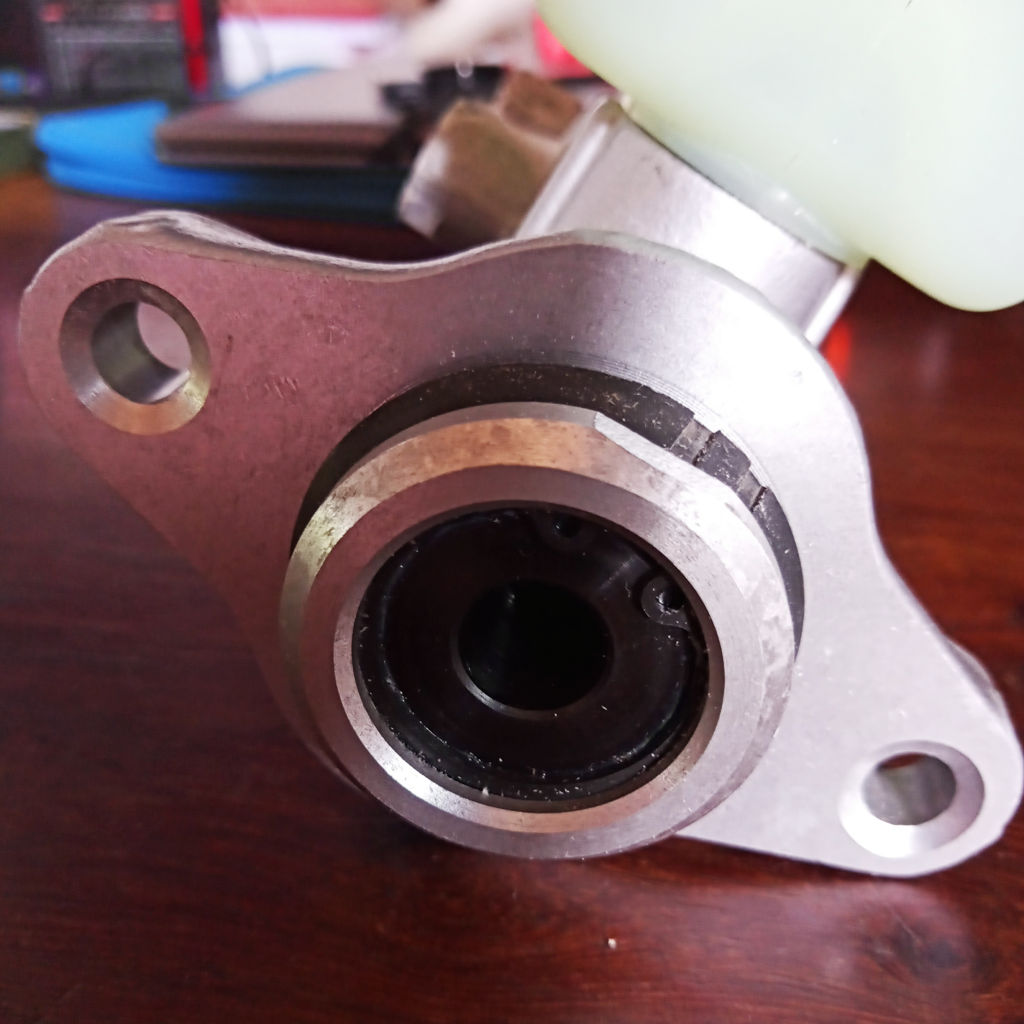
"Look, it won't fit!" I pointed at the flange.
He looked there, then looked in my face. "Kwa nini? Inaonekana sawa. — Why? It looks alright."
"Look, the joint flange — it has four holes! But in my car there are only two bolts!"
"It cannot be," the Toyota man replied.
"Because I'm telling you." I insisted that there were only two bolts. And two bolts need two holes, not four. And four is two too many!
He was still in doubt, but he said, "Njoo! — Come along!"
We went outside and he let me get into the company car. A car mechanic came along, too. We left for my home. "I need to see it for myself,"
the Toyota man explained.
At the garage I opened the bonnet of the car and the two men leaned over the side. I heard them discussing. Then the
Toyota man turned around and admitted, "You're right, this one does not fit." I looked disgruntled. "Told you," I thought but said to him,
"Then please order the right one. I will pick it up by tomorrow?"
"Kesho, Bwana!"
Next morning: I was overjoyed that this time he got the right cylinder. I compared type numbers and counted the holes: not more
than two. Good! But then I saw something else: a rubber seal on the shaft was missing. I pointed at the shaft and told the Toyota man,
"Bwana, here's a seal that went missing!"
His eyes followed my finger and he said, "There is none."
"Right, there is none, but there should be one actually," and I showed him my smart phone with a picture of a brake cylinder.
"Pole Bwana, hamna. — Sorry, Sir, we don't have."
"Then please, order it."
"Hatuwezi — We cannot do it."
I was boiling inside, shortly before blowing my top! Was there not — on this whole world — one place where
they had my rubber seal?
"But I NEED it!" I insisted, getting sulky already.
The Toyota man seemed to have an idea. He ushered me into the service car and we drove around Iringa Town for half a day. We went around every spare-part shop in reach and he asked everywhere whether they had a seal for my cylinder. Nothing whatsoever! The Toyota man felt sorry, and I was stumped.
A day or two later Evelyn and I visited our language teacher. She owned a tailor-shop in town. Nearby I discovered a tiny
spare-part store. I asked the owner if he had a seal for a brake cylinder.
"Ndiyo, ndiyo — of course. I have. Bring your brake cylinder tomorrow." My hopes rose again.
Next day I returned, carrying my brake cylinder under my arm. He looked at it, reached behind his shop door and produced a rather dusty
brake cylinder. I frowned. He peeled off the rubber seal and rolled it onto the shaft of mine.
"Fits?"
"Fits!" he declared with a proud smile.
"He who loses the way, becomes acquainted with it," people say in Tanzania. Not only have I come to know almost every car-part salesman in town, my quest for the brake cylinder also taught me more about Tanzanian culture than any book or classroom could have done. Tanzanian infrastructure may be lacking, but their networking is highly efficient. If they cannot go straight, they find a way around. Eventually somebody will come up with a working idea. Yes, it takes more time, but time is what people here have got. And it is meeting the right people, who can take you a mile or two further on your path. Until you find them, keep looking, keep smiling, keep going.
Alexander Breitenbach